The ADAS Technology in India revolution is changing the way we drive. Once limited to luxury vehicles, Advanced Driver Assistance Systems (ADAS) are now becoming increasingly common in mainstream cars and SUVs, making Indian roads smarter and significantly safer.
From automatic emergency braking to adaptive cruise control and lane-keeping assistance, ADAS is no longer just a premium feature—it’s becoming the future of everyday driving.
What is ADAS?
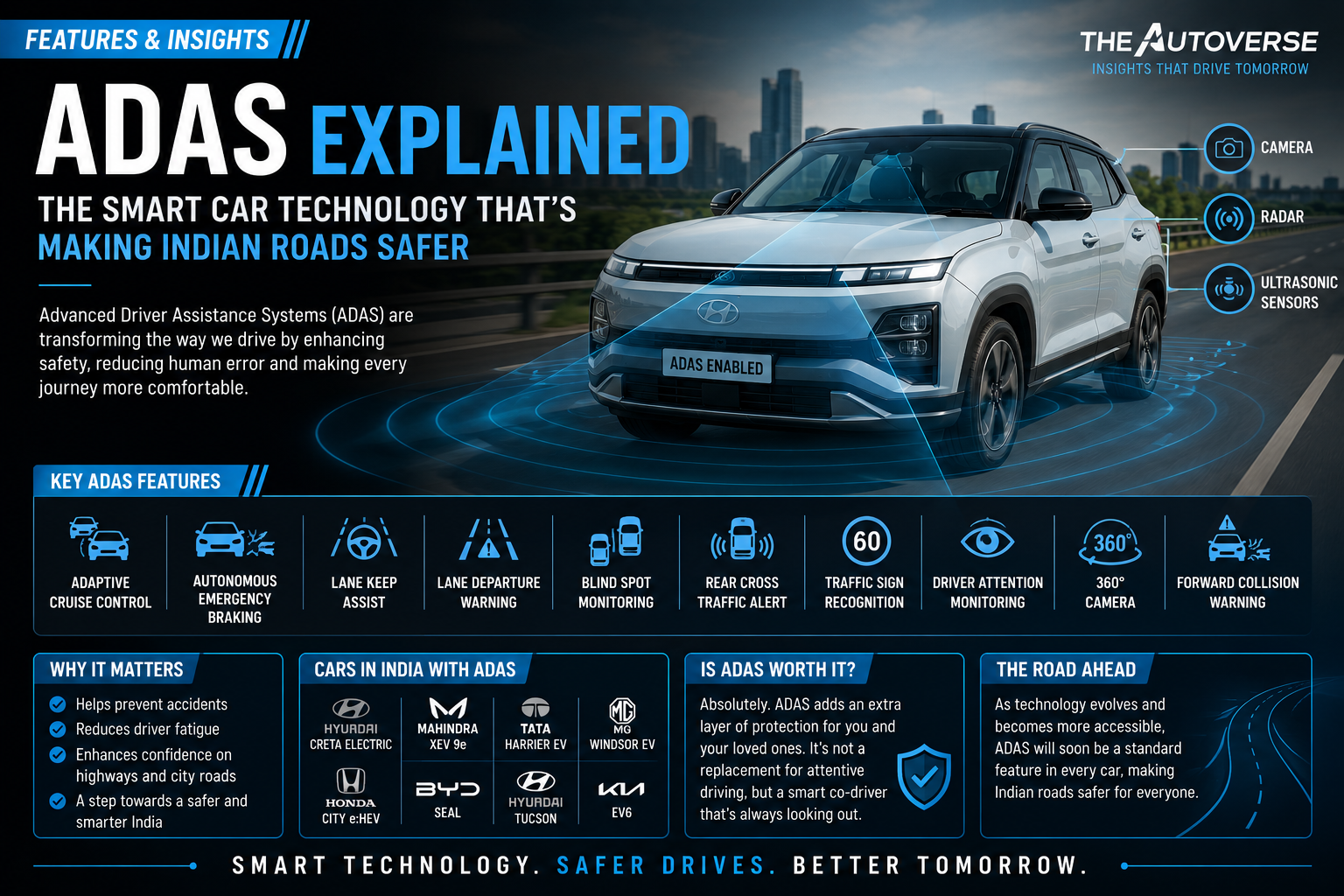
ADAS (Advanced Driver Assistance Systems) is a collection of intelligent technologies that use cameras, radar sensors, ultrasonic sensors, and artificial intelligence to assist drivers in preventing accidents and reducing driving stress.
These systems continuously monitor the surroundings and can alert the driver or even take corrective action when necessary.
In simple words, ADAS acts like a co-driver that’s always paying attention.
Popular ADAS Features You Should Know
Modern vehicles equipped with ADAS offer several intelligent safety systems, including:
- Adaptive Cruise Control
- Autonomous Emergency Braking
- Lane Keep Assist
- Lane Departure Warning
- Blind Spot Monitoring
- Rear Cross Traffic Alert
- Traffic Sign Recognition
- Driver Attention Monitoring
- 360-Degree Camera
- Forward Collision Warning
These features improve confidence behind the wheel and reduce the chances of human error.
Why ADAS Is Becoming Popular in India
Indian roads are unpredictable, with heavy traffic, pedestrians, cyclists, and varying road conditions.
ADAS helps drivers respond faster to potential hazards while making long highway drives more comfortable through intelligent automation.
Many new SUVs and premium cars now include Level 2 ADAS technology, making advanced safety accessible to more buyers than ever before.
Which Cars Offer ADAS?
Several popular vehicles in India now feature ADAS technology, including:
- Hyundai Creta Electric
- Mahindra XEV 9e
- Tata Harrier EV
- MG Windsor EV
- Honda City e
- BYD Seal
- Hyundai Tucson
- Kia EV6
The list continues to grow as manufacturers prioritize safety and technology.
Is ADAS Worth Paying For?
For daily commuters, highway travelers, and families, ADAS offers significant value.
While it cannot replace an attentive driver, it provides an additional layer of protection that can help avoid collisions and reduce fatigue during long journeys.
As technology becomes more affordable, ADAS is expected to become a standard feature across multiple vehicle segments.
Features & Insights Verdict
The ADAS Technology in India movement represents one of the biggest advancements in automotive safety over the past decade.
As more manufacturers adopt intelligent driving assistance systems, Indian consumers can expect safer roads, smarter vehicles, and a more connected driving experience.
The future of driving isn’t autonomous just yet—but it’s certainly becoming more intelligent.
Key Takeaways
✅ AI-powered driving assistance
✅ Improved road safety
✅ Reduces driver fatigue
✅ Available in more affordable cars
✅ Likely to become standard equipment in the coming years