The Battery Swapping vs Fast Charging debate is becoming one of the hottest topics in India’s electric mobility ecosystem. As EV adoption accelerates, automakers and policymakers are exploring the best ways to reduce charging time and improve convenience for consumers.
While fast charging technology is expanding rapidly, battery swapping is emerging as an innovative alternative that could transform urban transportation and commercial mobility.
What Is Battery Swapping?
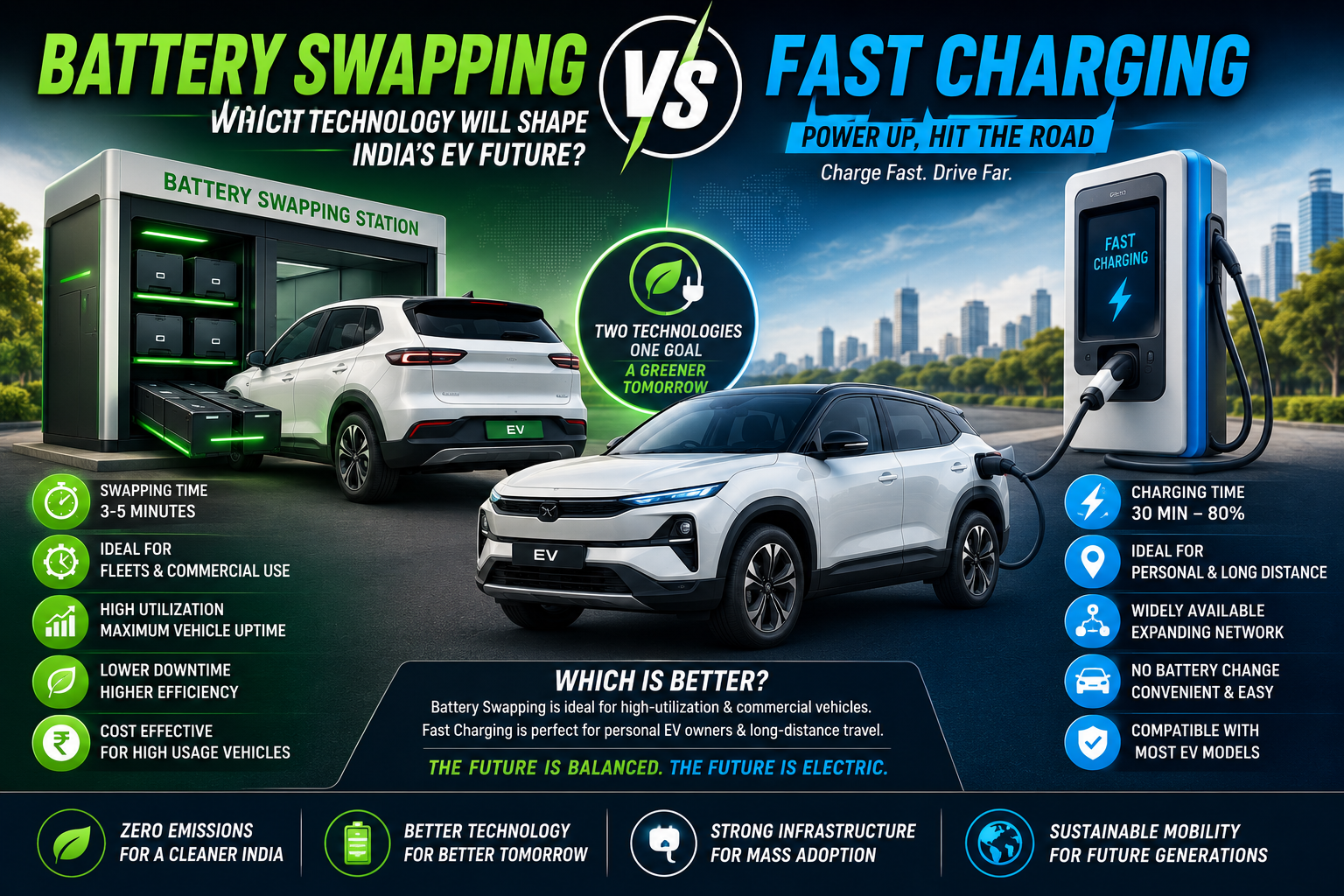
Battery swapping allows an electric vehicle to exchange its discharged battery for a fully charged one at a dedicated swapping station.
Instead of waiting for charging, drivers can replace the battery within a few minutes and continue their journey, making it an attractive solution for high-usage vehicles.
What Is Fast Charging?
Fast charging uses high-power DC chargers to recharge EV batteries much quicker than conventional AC chargers.
Many modern EVs can recover a significant portion of their battery capacity in less than an hour, making long-distance travel more convenient than ever before.
Which Is Better?
🔋 Battery Swapping
- ✅ Takes only a few minutes
- ✅ Ideal for commercial fleets and delivery vehicles
- ✅ Reduces vehicle downtime
- ❌ Requires standardized battery designs
⚡ Fast Charging
- ✅ Convenient for personal EV owners
- ✅ Expanding rapidly across highways and cities
- ✅ No battery replacement required
- ❌ Charging still takes longer than swapping
What Does This Mean for India?
India’s diverse mobility needs mean both technologies could coexist.
Battery swapping may become the preferred solution for two-wheelers, three-wheelers, taxis, and logistics fleets, while fast charging is expected to dominate the passenger car segment as charging infrastructure continues to improve.
EV Zone Verdict
The Battery Swapping vs Fast Charging discussion is not about choosing one winner but understanding how both technologies can complement each other.
As India’s EV ecosystem evolves, these innovations will play a vital role in making electric mobility faster, more practical, and more accessible for millions of users.
Key Takeaways
- ✅ Battery swapping offers ultra-fast energy replenishment
- ✅ Fast charging infrastructure is expanding rapidly
- ✅ Both technologies serve different use cases
- ✅ India is investing in multiple EV charging solutions
- ✅ The future of EV mobility may include both systems