India’s electric vehicle (EV) revolution is moving fast—but is it moving right?
A recent opinion piece highlights a hard truth: simply pushing EV adoption isn’t enough. If India wants a truly clean mobility future, it needs a serious strategic reset.
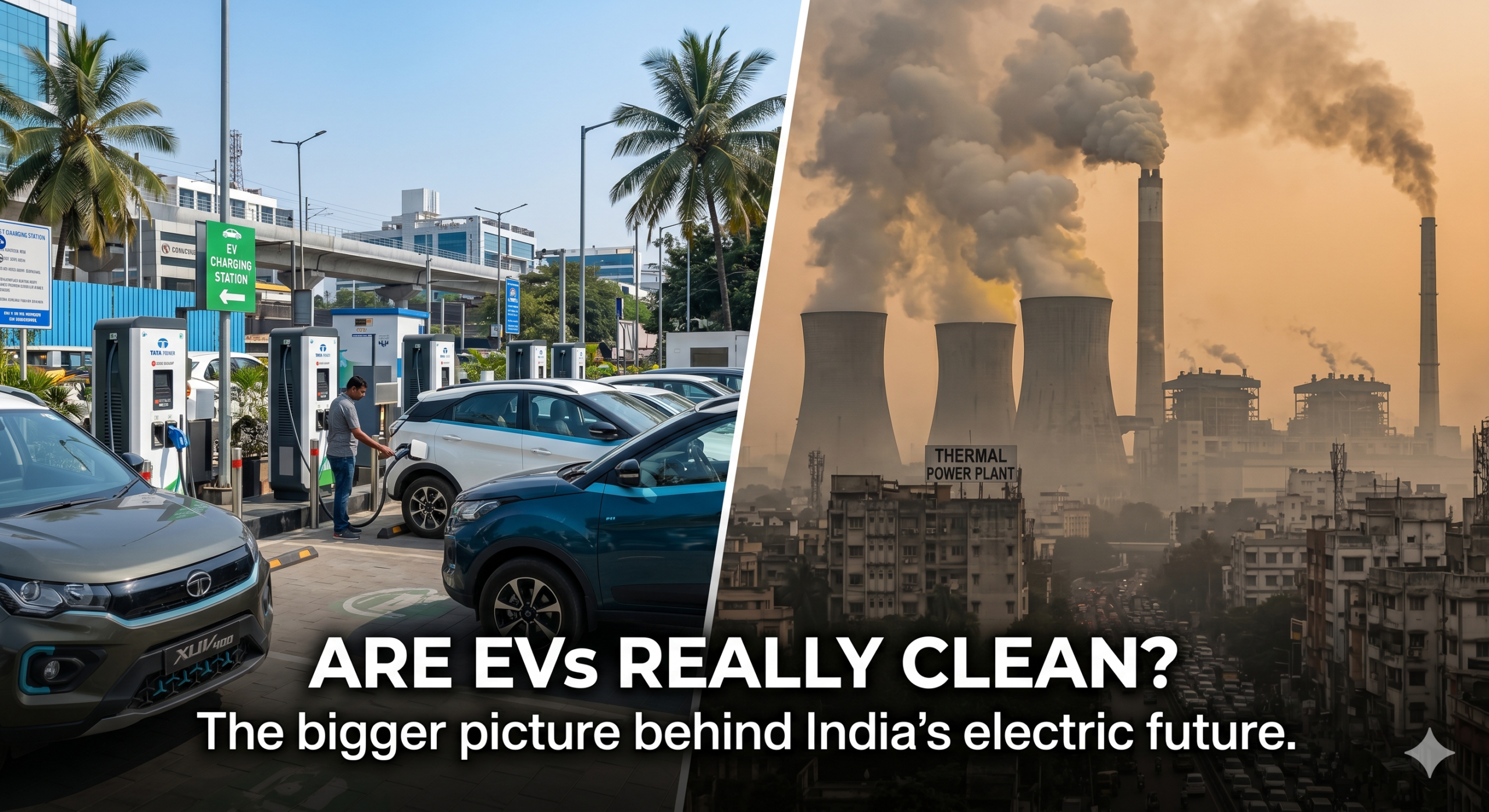
The Big Problem: EV ≠ Clean by Default
Here’s the uncomfortable reality:
👉 EVs are only as clean as the energy powering them
👉 India still relies heavily on coal-based electricity
So while EV adoption is rising, the environmental benefit isn’t always as strong as it seems.
What India Is Missing Right Now
1. Weak Supply Chains
India still depends heavily on imports for:
- Batteries
- Critical minerals
Without strong local manufacturing, EV growth remains fragile and expensive.
2. Charging Infrastructure Gaps
- Charging network still uneven and limited
- Rural and highway coverage is weak
This leads to range anxiety, one of the biggest barriers for buyers.
3. Affordability Issues
- EVs are still expensive upfront
- Budget segment adoption remains low
Even today, cost is the biggest hurdle for mass adoption.
4. Bigger Picture Ignored
Experts argue that clean mobility isn’t just about EVs. It also needs:
- Better public transport
- Cleaner energy mix
- Smarter urban planning
In short: EVs alone won’t fix pollution
Reality Check: Growth Is Strong, But Not Perfect
India’s EV market is growing rapidly, with strong sales momentum—but:
- Adoption is urban-centric
- Infrastructure is still catching up
- Policy changes can impact demand suddenly
The journey has started—but it’s far from smooth.
What Needs to Change?
Focus on:
- Local battery manufacturing
- Renewable energy integration
- Affordable EV options
- Better charging ecosystem
Avoid:
- Over-reliance on subsidies alone
- Ignoring public transport
Final Take
India’s EV push is exciting—but it needs direction, not just speed.
👉 EVs are part of the solution
👉 Not the entire solution
If policymakers get the strategy right, India can lead the global EV race.
If not, it risks building a system that looks green—but isn’t fully sustainable.