The Sodium-Ion Batteries for EVs technology is emerging as one of the most promising innovations in the electric vehicle industry. As automakers and battery manufacturers search for affordable alternatives to lithium-ion batteries, sodium-ion technology is gaining global attention for its potential to reduce EV costs and improve accessibility.
While lithium-ion batteries currently dominate the market, sodium-ion batteries could play a crucial role in making electric mobility more affordable for millions of consumers.
What Are Sodium-Ion Batteries?
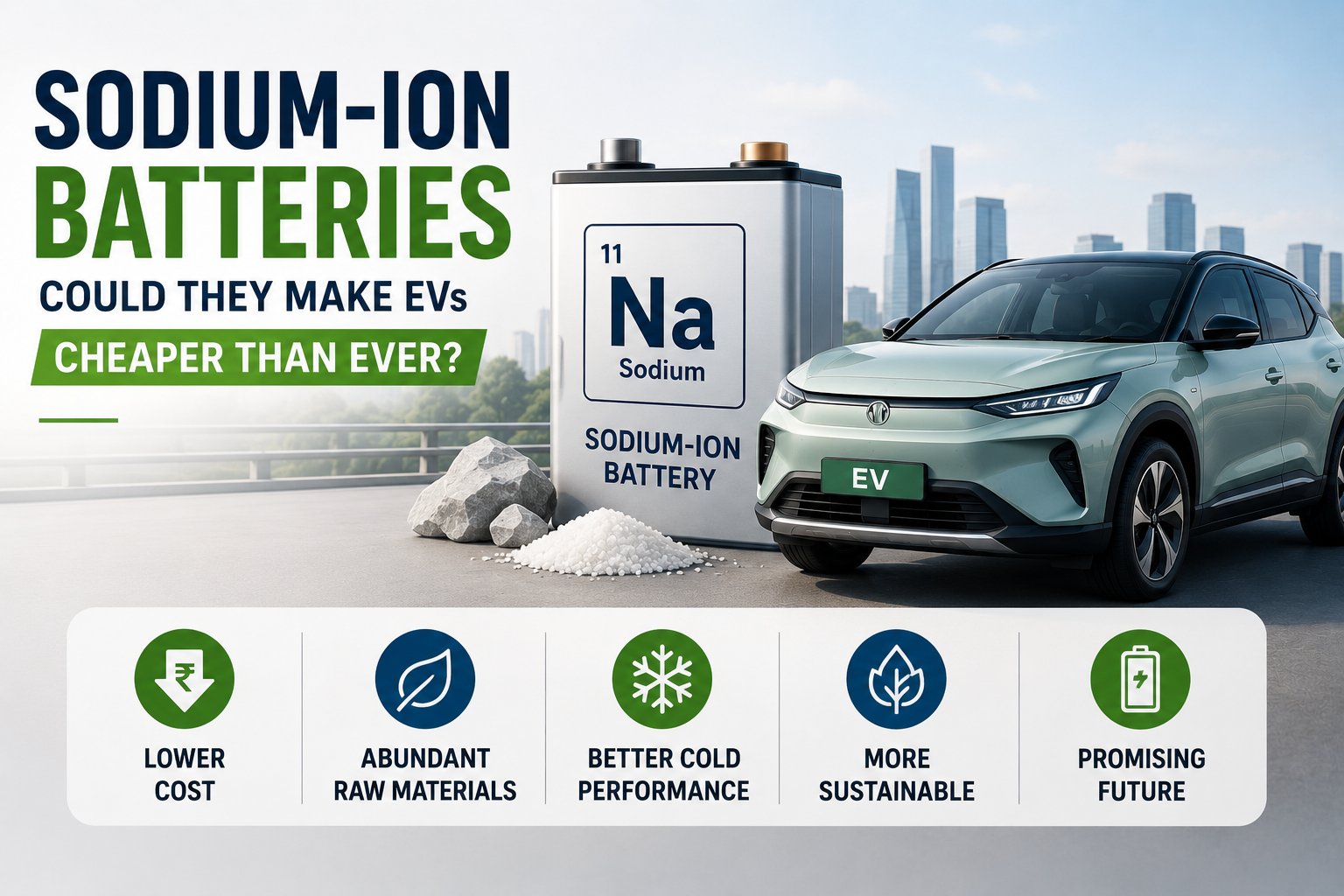
Sodium-ion batteries work on a principle similar to lithium-ion batteries but use sodium, an element that is abundant and widely available across the world.
Because sodium is easier and cheaper to source than lithium, manufacturers believe these batteries could significantly lower production costs while reducing dependence on expensive raw materials.
Why Is the Auto Industry Interested?
Battery packs account for a large portion of an EV’s total cost.
If sodium-ion technology reaches mass production, manufacturers may be able to produce electric vehicles at lower prices, making EV ownership more affordable for middle-class buyers.
The technology could also strengthen battery supply chains by reducing reliance on limited lithium reserves.
Advantages of Sodium-Ion Batteries
The technology offers several promising benefits:
- ⚡ Lower manufacturing costs
- ⚡ Abundant raw materials
- ⚡ Better performance in colder climates
- ⚡ Improved sustainability
- ⚡ Reduced dependence on imported lithium
These advantages could make sodium-ion batteries particularly attractive for entry-level electric cars and urban mobility solutions.
Are There Any Challenges?
Despite their potential, sodium-ion batteries are still evolving.
Current versions generally offer lower energy density than advanced lithium-ion batteries, which can result in shorter driving ranges. Researchers and manufacturers are actively working to improve performance and efficiency before large-scale adoption.
What Could This Mean for India?
India’s EV market is highly price-sensitive, making affordable battery technology extremely important.
If sodium-ion batteries become commercially viable, they could help manufacturers introduce lower-cost electric vehicles while supporting the country’s goal of expanding sustainable mobility.
The technology may also reduce battery production costs and strengthen domestic EV manufacturing in the coming years.
EV Zone Insight
The Sodium-Ion Batteries for EVs revolution has the potential to reshape the future of electric mobility.
Although lithium-ion technology will continue to dominate in the near term, sodium-ion batteries could become an affordable alternative for everyday electric vehicles, helping accelerate EV adoption across India and other emerging markets.
The next breakthrough in electric mobility may not come from a new car—but from the battery powering it.
Key Takeaways
- ✅ Sodium is cheaper and more abundant than lithium
- ✅ Could reduce EV manufacturing costs
- ✅ Supports affordable electric mobility
- ✅ Eco-friendly and sustainable technology
- ✅ A promising future for budget EVs